
Louise Wild, BA (Hons.) Primary Education, London Metropolitan University
Picture this- early 1970s, in a perfectly ordinary corner of North London, something extraordinary and to some downright alarming appeared to happen. At William Tyndale junior school the timetable dissolved, lessons became optional-ish, and the traditional image of rows of children chanting verb endings gave way to a freer scene of wandering, exploration, loud chatter, and the occasional fence climbing philosophical moment. To supporters it was educational enlightenment. To critics, it looked suspiciously like inmates had been handed the keys.
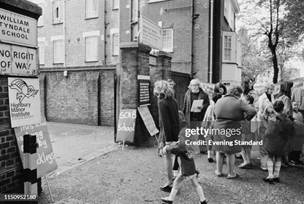
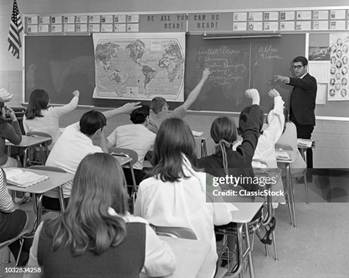
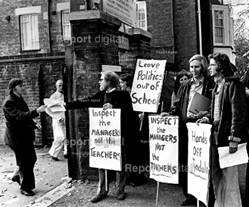
The reaction was swift and dramatic. Teachers argued, parents worried, local authorities hovered nervously to observe, and the national media treated it less like a pedagogical experiment and more like a minor constitutional crisis (Davis, 2002). How, people demanded, could a school funded by the state apparently decide that formal teaching was, well…….negotiable?
To understand why this caused such national indigestion, it is useful to rewind and revisit the post war promise of the Education act 1944, where after the rubble of the Second World War (1939-1944), Britain didn’t just rebuild roads and houses, it set its sights on rebuilding ‘opportunity’. Education became a ‘pillar of the welfare state’ (Blundell, 2012), and a machine designed to produce not only well-rounded citizens, but engineers, nurses, teachers and crucially, taxpayers. Primary schools stopped being quiet holding spaces for children and became something much bigger, the starting point for social mobility and economic recovery (Gillard, 2011; Blundell, 2012).
So, when Tyndale seemed to drift gloriously off script, swapping structure for self-direction, the anxiety wasn’t really about a little classroom chaos or slightly unconventional schooling methods, it was about something far bigger. If schools stopped deliberately teaching knowledge and skills, what would happen to the very children the 1944 settlement was meant to ‘elevate?’ Could freedom in the classroom accidentally favour those who already had the advantage at home (I’ll get there shortly), and most provocatively of all, had ‘Great’ Britain confused educating children with engineering the future workforce?
First, let’s have a look at the groovy idea that started it all, because to be fair to the teachers at William Tyndale they hadn’t all suddenly downed tools and taken up interpretive dance. They were drawing on a wave of educational thinking that had been building through the 1960s (Gillard, 2007, 2011; Blundell, 2012; Jones, 2016). This was the era of optimism, psychology, and a growing suspicion that forcing children to sit silently at desks while being spoon-fed the ‘three R’s’ might not in fact be the pinnacle of human development.
At the heart of this movement was the work of Piaget (1952), who argued that children do not learn like miniature adults. They construct knowledge gradually through interaction, exploration and making sense of the world at their own pace. In other words, you cannot simply pour long division into a seven year old and expect it to settle (trust me, I have a seven year old). These ideas also chimed quite neatly with the earlier philosophy of Dewey (1916), who believed schools should function less like factories of instruction and more like miniature democracies, a place where children should learn by doing, questioning and participating, not merely by listening.
These ideas fed into official thinking (Burston, 1965; Blundell, 2012), which in turn heavily encouraged schools to become more child centred (Blundell, 2012). Reports spoke warmly of discovery learning, creativity, and the importance of the child’s emotional wellbeing, all perfectly reasonable aims unless you happened to be imagining Britain’s economic future resting on neat foundations of correct arithmetic. William Tyndale then, did not invent progressive education, it simply took this philosophy at word and followed it further than most people were comfortable adventuring.
So, what did it look like? Well, instead of rigid lessons, classrooms became open environments (Davis, 2002). Children moved freely without instruction and learning was meant to emerge organically from curiosity rather than instruction. The teacher’s new role? part facilitator, part peacekeeper, part person silently questioning every decision that had led to this moment. It sounds idyllic. And for a select few I’m sure it actually lived up to the brochure 😊. But here’s where things get complicated and where sociology crashes the party with a raised eyebrow. Yes, enter Pierre Bourdieu (Bourdieu and Passeron, 1990), who rather inconveniently for education romantics,- yes, you Rousseau (Rousseau, cited in Blundell, 2012) argued that schools do not just transmit knowledge- they also reflect the inequalities already baked into society. Party killer.
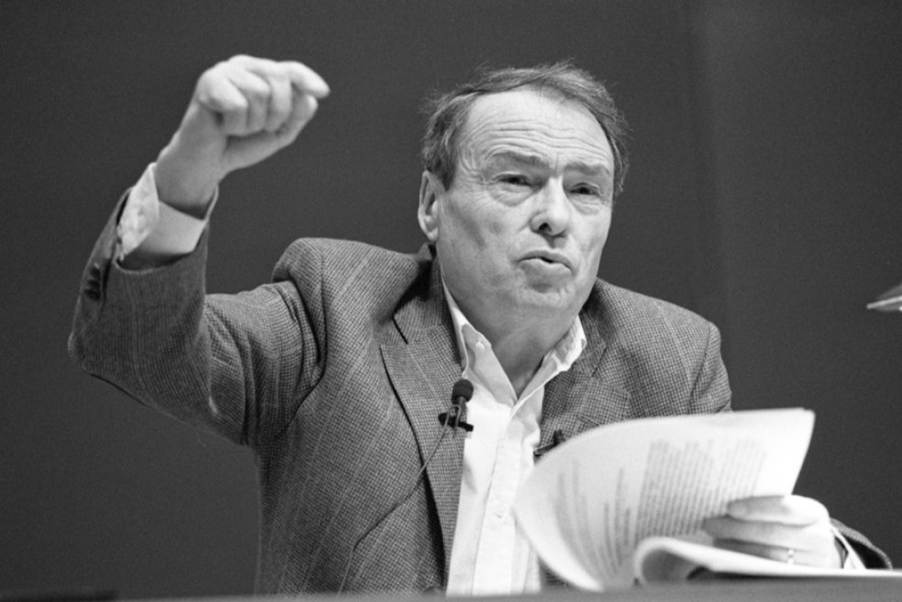
Through his concept of ‘cultural capital’ Bourdieu suggests that some children arrive at school already fluent in the behaviour that education rewards such as proficiency in languages, familiarity with books, support with learning at home and the overall expectation of success (Bourdieu and Passeron, 1990). Other children rely far more heavily on school to provide those things, and this is exactly where the William Tynedale experiment hit its sociological snag. A model built on freedom, autonomy, and self-direction assumes that all children begin with the same toolkit.
MEMO: They don’t!
And here’s the uncomfortable twist, if you reduce structure in the name of freedom, the children who depend most on school for guidance may actually lose out. So, what looked like ‘liberation’ could unintentionally become a widening gap (Bourdieu and Passeron, 1990).
Then the question becomes, why did this become a national anxiety, rather than just another local school experiment gone slightly off-script?
This aligns with what economists later termed the ‘human capital theory’ (Schultz, 1961; Leoni, 2025), the idea that investment in education leads to a more skilled, productive workforce and by extension, a stronger economy. And this is precisely why William Tyndale caused such unease. If education was expected to deliver measurable skills like literacy and numeracy, then a ‘progressive’ model that appeared to loosen or even abandon such structure looked less like innovation and more like risk, and governments are rarely fond of uncertainty in systems this important…
And now for the irony. Could a school designed to be so enlightened end up triggering a return to structure? Ding, Ding, Ding. Yes. One of the most fascinating (and slightly ironic) outcomes of the William Tyndale controversy is that it helped shift the national mood in the opposite direction to what its proponents intended. By the late 1970s and into the 1980s, policymakers were becoming increasingly wary of approaches that appeared too open-ended or difficult to measure (Gillard, 2011). The question was no longer simply “are children engaged?” but “can we prove they are learning?”.
From there, the calls grew louder: clear curricula, measurable outcomes, accountability, standards that could be proven rather than politely assumed. And yes, you already know where this is going. The national curriculum (DfE, 1988). The pressure cooker of the 11+. SATs. League tables. Ofsted. The whole apparatus. In many ways, the controversy fed into a broader shift towards what Stephen Ball (2003) later described as a culture of performativity, where education systems are judged through data, outcomes, and comparison rather than the messy reality of learning itself. In a strange twist then, an experiment meant to free education from rigidity ended up nudging it straight back in.
It is as if the system collectively paused, looked around at the chaos, and said: (and here I cannot help but imagine my lecturer Jo Cooke voicing it)
“Right. Fascinating. Now let’s make sure someone, somewhere, is actually learning to read.”
So… Did William Tynedale fail?
That depends entirely on what you think primary education is for and this is where the debate becomes less about one school and more about competing visions of childhood and society (Blundell, 2012). If education is understood as a space for nurturing autonomy, creativity and emotional development, something Cremin and Barnes (2015) would likely approve of, then no, it wasn’t failing, it was experimenting, albeit slightly unconventionally, with a more humane and child centred approach to learning, challenging rigid assumptions about what classrooms should look like and who holds control within them.
But if education is to be understood as a mechanism for ensuring that every child, regardless of background, channel UNCRC
(1989) gains access to essential knowledge and skills, then the lack of structure appears more problematic. From this perspective, the absence of clear teaching risks leaving the most vulnerable pupils without the tools they rely on schools to provide. This is not just about abstract ideas of knowledge and fairness, it is a lively and persistent tension that plays out daily in real classrooms.
Walk into a modern primary school like the one I am working in today and you will still see this balancing act playing out in real time. Group work and collaborative discussion alongside daily phonics drills, creative writing tasks alongside tightly structured assessment criteria, wellbeing initiatives alongside detailed progress tracking. Hmm.

The tension between freedom and structure, exploration and instruction hasn’t gone anywhere. If anything, it has become more evident because it taps into a much bigger question about what education is actually for? Should primary schools prioritise curiosity and creativity, or consistency and measurable outcomes? And more to the point, can they realistically do both, especially in a system that is also expected to drive economic growth and reduce social inequality? William Tyndale didn’t create this dilemma, but the experiment certainly made it impossible to ignore.
Summarising thoughts:
So, did William Tyndale Junior School nearly bring down British civilisation by misplacing a timetable? Probably not. But it did something arguably more important: it exposed a national insecurity about what we actually expect schools to deliver.
An experiment rooted in child-centred learning ended up strengthening the case for tighter control, measurable standards and a centralised curriculum, subtly cementing the very structure it seemed to resist. In trying to move away from post-war thinking about education as economic investment, it quietly reinforced it (nod to Bourdieu). And in doing so, it forced some uncomfortable questions back onto the table: how much structure is actually necessary? Who really benefits from all this ‘freedom’? And can a system designed to produce the future workforce genuinely prioritise the whole child?
P.S. The debate hasn’t gone anywhere, it has just changed shape. When a primary school appears to go rogue, what we are really seeing is society having a quiet debate with itself about what education is for… and who it’s really serving.
A Small Reflection (From the Safe Distance of a Modern Classroom)
Reading about William Tyndale is strangely unsettling because despite the 1970s setting, the arguments don’t feel distant at all, they do in fact feel uncomfortably close. Having experienced primary education myself in a far more structured era, with various schemes, targets, and the constant sense that someone, somewhere, is measuring progress, it is hard to imagine a classroom without that kind of structure holding it together. The idea of children choosing whether to attend a lesson sounds liberating on paper, but in reality, it’s slightly terrifying. At seven years old, I would not have chosen fronted adverbials over the playground, and I doubt many would.
But what unsettles me more now is not just the child’s perspective, it is the teachers’. Because as a future practitioner, and as a mother raising three children of my own, this debate stops being theoretical very quickly. It becomes personal. The responsibility placed on teachers and parents feels enormous! We are expected to nurture curiosity, creativity, confidence, and to care for the ‘whole child’, while also ensuring that every pupil leaves the classroom able to read, write, calculate, and compete in a system that does not always account for where they started. That is not just teaching. That is balancing competing expectations that do not always sit comfortably together.
What strikes me most is how much trust is placed on schools to ‘get it right,’ particularly for the children who rely on them the most. For many, school is not an extension of learning, it is the foundation of it. The place where vocabulary is built, languages learned, confidence formed, and futures quietly (or not) take shape. That makes the balance between freedom and structure feel less like a philosophical preference and more like a question of fairness, and if I am honest, a source of pressure.
And yet, looking back on my own learning journey, the moments that stayed with me were never the most tightly controlled lessons. They were the moments of discussions, exploration, the slightly off-script conversations where something genuinely clicked. That push and pull is still there, and now it feels less like an abstract debate and more like something I will have to navigate daily.
Because the dilemma William Tyndale exposed was never really resolved. It was simply passed on quietly and steadily to the teachers who came after. And soon, that will include me.
Sincerely, L.
References:
- Ball, S.J. (2003) ‘The teacher’s soul and the terrors of performativity’, Journal of Education Policy, 18(2), pp. 215–228. Available at: https://doi.org/10.1080/0268093022000043065.
- Blundell, D. (2012) Education and Constructions of Childhood. London: Bloomsbury Academic.
- Bourdieu, P. and Passeron, J‑C. (1990) Reproduction in Education, Society and Culture. 2nd edn. London: Sage Publications. Available at: https://www.academia.edu/30762521/Pierre_Bourdieu_Jean_Claude_Passeron_Reproduction_in_Education_Society_and_Culture_Sage_Publications_1990_
- Burston, W.H. (1965) ‘The Influence of John Dewey in English Official Reports’, British Journal of Educational Studies, 13(1), Available at: https://www.jstor.org/stable/3441355
- Cremin, T. and Barnes, J. (2015) Creativity in the Primary Curriculum. London: Routledge.
- Davis, J. (2002) ‘The Inner London Education Authority and the William Tyndale Junior School Affair, 1974–1976’, Oxford Review of Education, 28(2–3), pp. 275–297. Available at: https://www.jstor.org/stable/1050913
- Dewey, J. (1916) Democracy and Education. New York: Macmillan.
- Education Act 1944. Available at: https://www.legislation.gov.uk/ukpga/Geo6/7-8/31/pdfs/ukpga_19440031_en.pdf
- DfE. (1988) Education reform act 1988. Available at: https://www.legislation.gov.uk/ukpga/1988/40/contents
- Gillard, D. (2007) ‘Presaging Plowden: an introduction to the Hadow Reports’, FORUM, 49(1), Available at: https://journals.lwbooks.co.uk/forum/vol-49-issue-1/article-2955/
- Gillard, D. (2011) Education in England: a brief history. Available at: https://education-uk.org/history/
- Jones, K. (2016) Education in Britain: 1944 to the Present. 2nd edn. Cambridge: Polity Press.
- Leoni, S. (2025) ‘A historical review of the role of education: from human capital to human capabilities’, Review of Political Economy, 37(1), pp. 227–244. Available at: https://doi.org/10.1080/09538259.2023.2245233.
- Piaget, J. (1952) The Origins of Intelligence in Children. New York: International Universities Press.
- Schultz, T.W. (1961) ‘Investment in human capital’, The American Economic Review, 51(1), pp. 1–17. Available at: https://www.jstor.org/stable/1818907
- United Nations (1989) Convention on the Rights of the Child.